

This article draws on publicly available climate forecasts, international climate research reports, and publicly available transit data from the Panama Canal Authority. Climate forecasts are probability-based model projections and do not guarantee that any specific event will occur. The actual evolution of ENSO phases remains uncertain. The analysis of potential changes in automotive aftermarket supply chains and component demand represents an industry-level assessment based on possible climate impacts. Voyage and transportation cost estimates are scenario-based calculations rather than official figures. This article is intended for reference by global automotive aftermarket professionals and should not be used as the sole basis for procurement decisions.
El Niño Has Yet to Fade. Is La Niña on the Horizon?
As of late 2026, El Niño remains in its developing phase, while whether and when conditions may transition toward La Niña remains uncertain. The ENSO cycle can be viewed as a climate “seesaw,” with shifts between warmer and cooler phases influencing temperature and rainfall patterns in different regions.
For the automotive aftermarket, the challenge is not necessarily a single extreme-weather event, but the potential for changing climate conditions to create successive pressures on demand, logistics and component operating environments.
01 | What Is the ENSO “Climate Seesaw”?
The ENSO cycle consists of three phases:
El Niño — Warm Phase: Abnormally warm sea-surface temperatures in the central and eastern equatorial Pacific.
La Niña — Cool Phase: Abnormally cool sea-surface temperatures in the central and eastern equatorial Pacific.
Neutral Phase: The transitional state between the two phases.
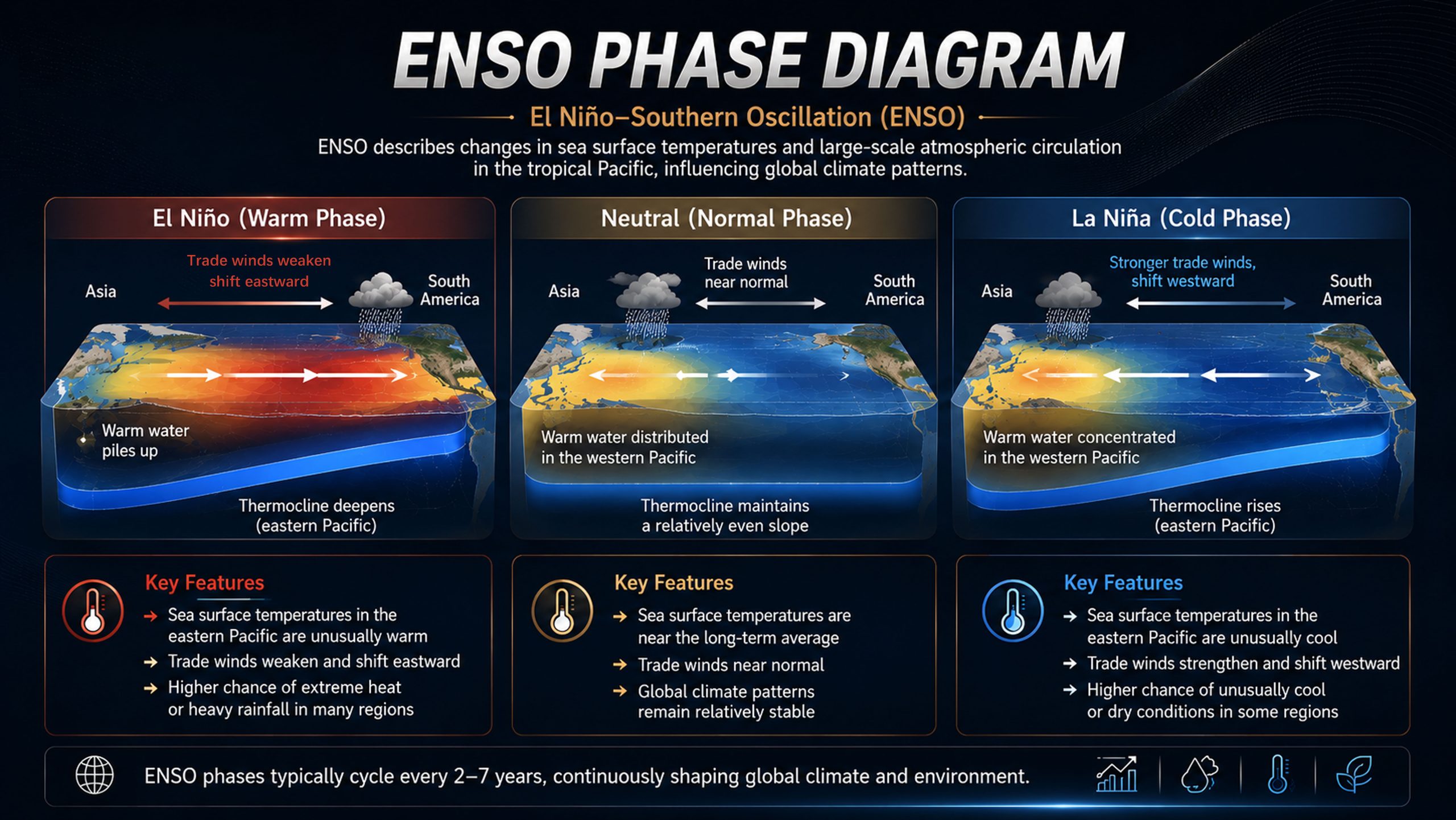
The current El Niño remains in its developing phase. What comes next remains uncertain. A future transition toward La Niña would represent a change in the type of climate-related pressure facing different regions and industries, rather than an end to climate variability.
For the automotive aftermarket, this distinction matters: supply chain planning needs to account not only for individual weather events, but also for changing conditions across the broader ENSO cycle.
02 | Logistics: Could the Panama Canal Face Renewed Transit Constraints?
The climate conditions associated with ENSO can influence rainfall patterns across different regions, including areas around the Panama Canal. However, the relationship between ENSO phases and local water availability is not deterministic, and future canal conditions will also depend on regional rainfall and water-management factors.
Previous drought conditions constrained Panama Canal operations and affected international shipping. For automotive aftermarket trade between Asia and the Americas, disruptions caused by water levels or weather conditions could lead to rerouting, longer transit times and higher transportation costs.
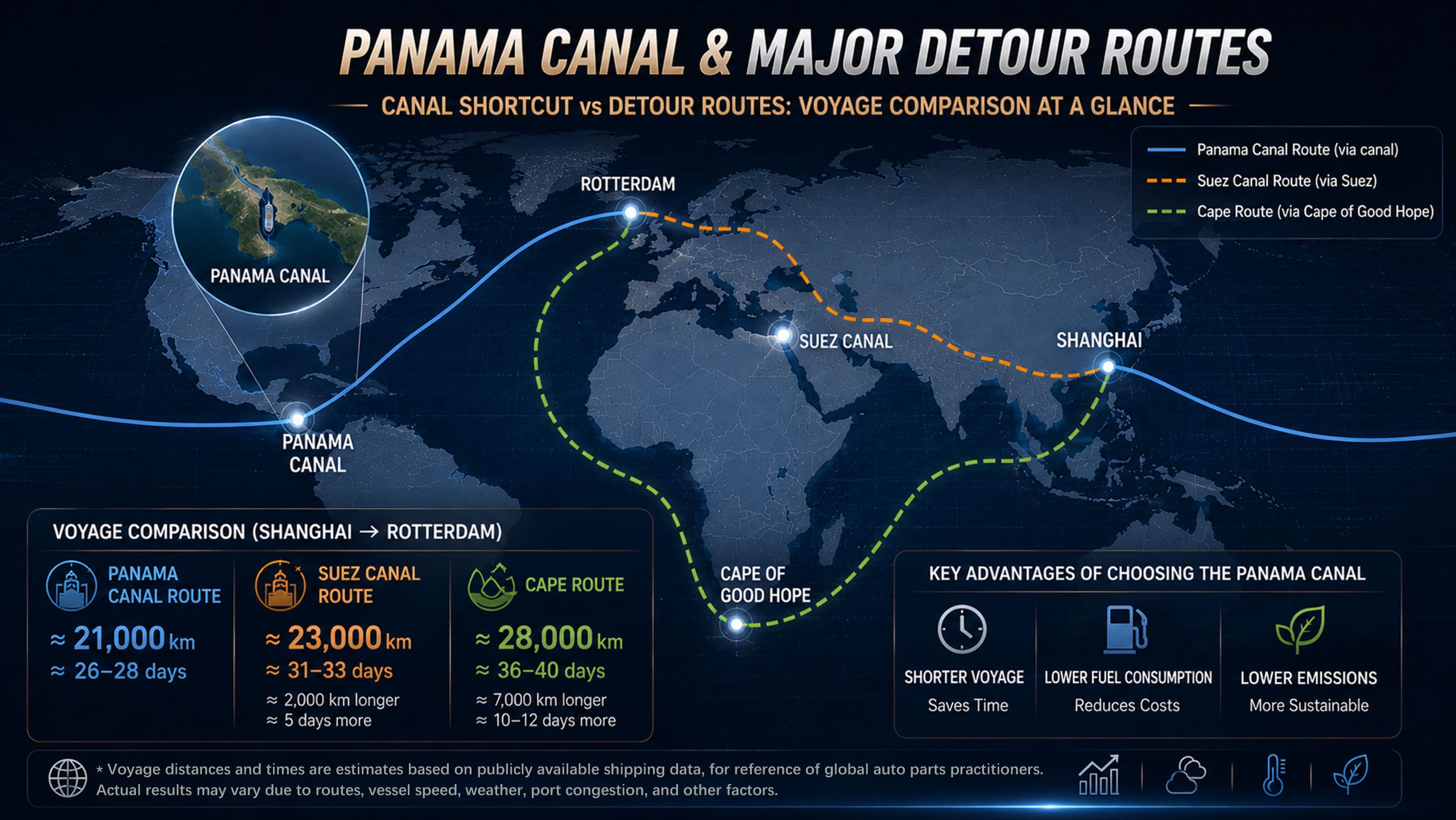
If similar conditions emerge again, shipments of automotive aftermarket parts from Asia to the U.S. East Coast may need to consider alternative routes, including the Suez Canal or routes around the Cape of Good Hope.
Longer routes can extend delivery times, while higher transportation costs can add further pressure to procurement costs.
Note: Actual changes in transit times and transportation costs depend on routing, freight rates and operating conditions. Any related figures are intended only as general industry scenario references.For aftermarket buyers, the broader lesson is clear: when a major trade route becomes constrained, delivery reliability can become as important as the quoted purchase price.
03 | Hot and Humid Conditions: A Hidden Risk for Rubber Seals and Motors
Hot and humid operating environments can affect automotive components through mechanisms that differ from prolonged heat exposure, particularly where moisture, temperature and material aging interact.
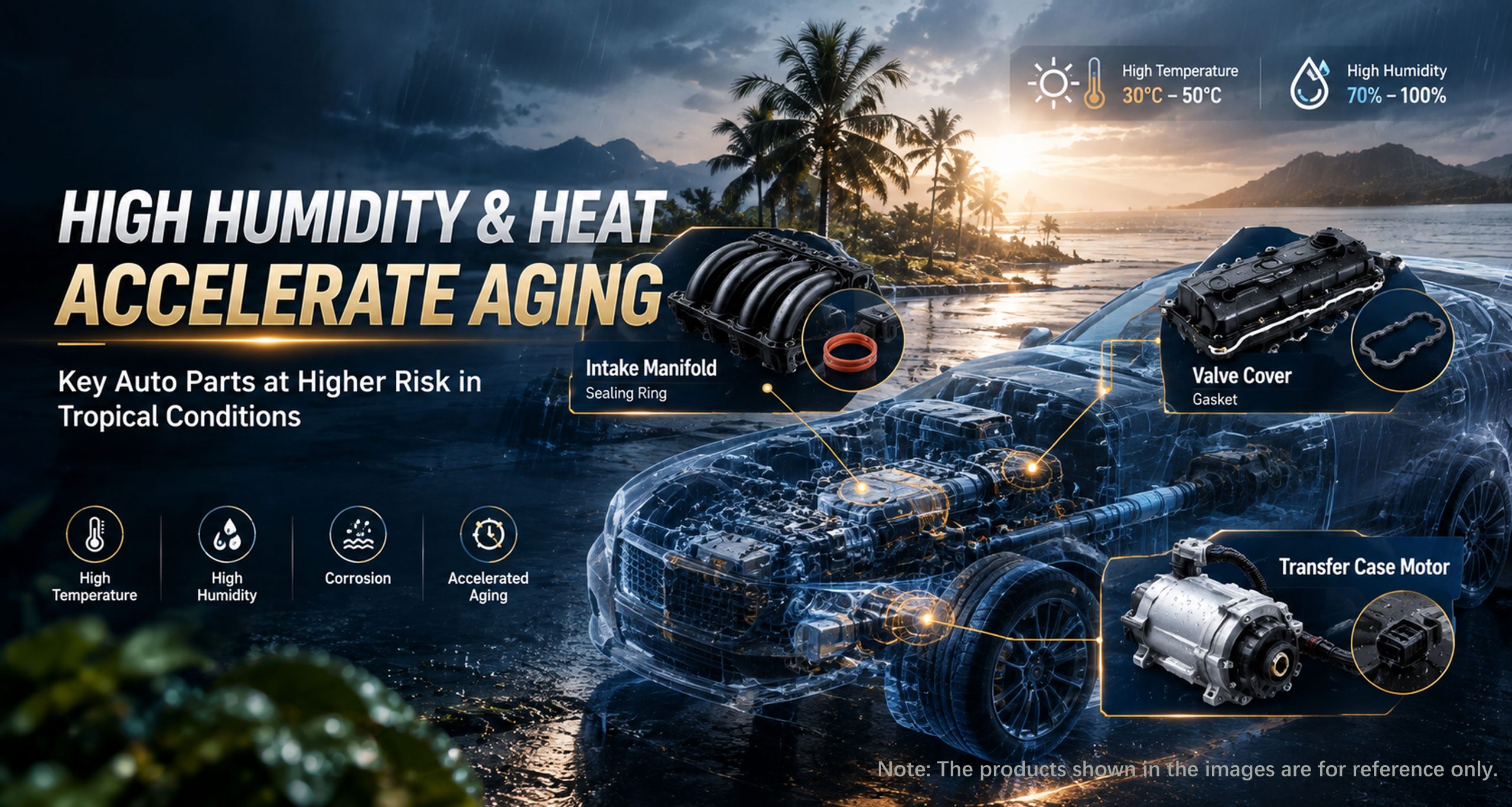
- Accelerated aging of rubber sealing components
Components such as intake manifold seals, valve cover gaskets and other rubber sealing products can experience accelerated material degradation under high-temperature, high-humidity conditions, leading to hardening, cracking and loss of elasticity.
For aftermarket applications, prolonged exposure to such conditions can increase the importance of sealing performance and replacement availability.
- Greater moisture exposure for transfer case motors and air door actuators
High humidity can place additional demands on the sealing of motor housings. Moisture exposure may affect circuit boards, lubricated components and electrical contacts, increasing the risk of oxidation and performance degradation.
These risks become particularly relevant in regions experiencing prolonged periods of heavy rainfall and high humidity, where moisture-related component performance can become an additional consideration for maintenance and replacement.
This is where the climate “seesaw” can create a compounded challenge: components exposed to elevated thermal stress may subsequently encounter different environmental pressures when regional conditions shift toward wetter and more humid patterns.
For vehicles in long-term operation, this kind of successive environmental change deserves early attention from both supply chain and aftermarket service teams.
04 | Procurement Strategy: From Responding to Individual Events to Managing Climate Cycles
For automotive aftermarket procurement, one of the most significant challenges during periods of climate transition is the combination of uncertain demand patterns and uncertain delivery conditions.
Inventory planned entirely around historical demand may become less aligned with market needs if regional conditions change. At the same time, focusing solely on the lowest purchase price can create additional exposure when logistics disruptions lead to extended transit times or port delays.
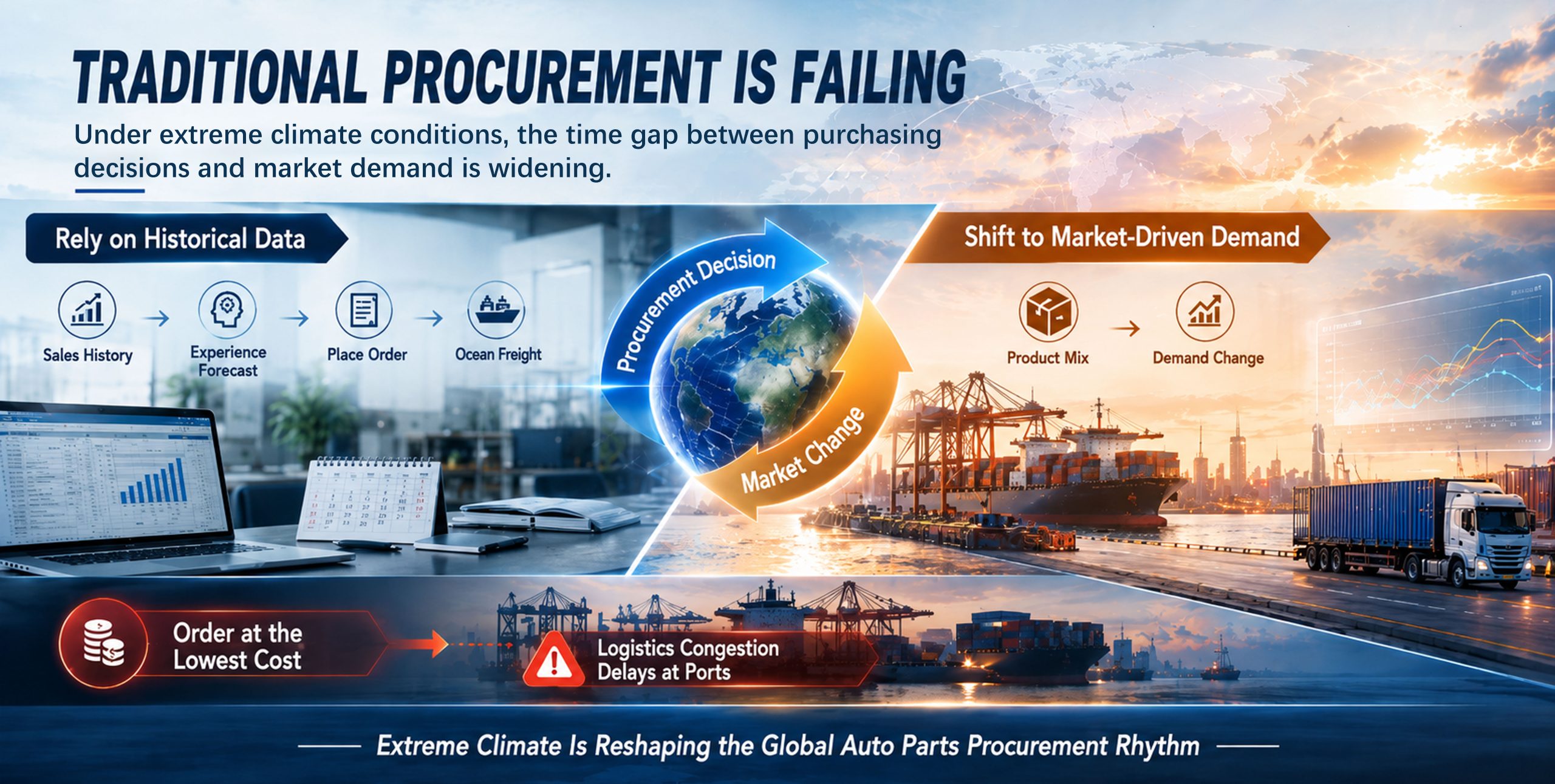
Against the backdrop of the ENSO climate cycle, supply chain planning can consider several adjustments:
- Move beyond purely seasonal inventory planning:Inventory priorities can be reviewed according to changing climate conditions. Cooling-system components may receive greater attention during periods of elevated heat risk, while sealing and moisture-exposed components may require greater consideration under persistently wet and humid conditions.
- Consider delivery reliability alongside purchase price:Suppliers with stable manufacturing capabilities and established experience serving multiple export markets can provide greater flexibility when logistics conditions become less predictable.
- Strengthen multi-regional supply and service capabilities:Partners capable of providing alternative supply or logistics solutions can help buyers respond more effectively when transportation routes or regional supply conditions are disrupted. The objective is not simply to carry more inventory, but to build greater flexibility into procurement and supply chain planning.
05 | Building Supply Chain Resilience for Long-Term Climate Volatility
A strong El Niño is not the end of the cycle, and a future La Niña would not be the end of it either.
ENSO is a recurring climate pattern, and its impacts vary by region and season. How and when climate phases shift, and how different regions are affected, will continue to require close observation.
For the automotive aftermarket, the more practical question is not whether one particular ENSO phase will occur next, but how supply chains can remain adaptable as climate conditions change. Rather than waiting for the next extreme weather event to force adjustments, supply chain planning can incorporate climate variability as an ongoing consideration.
Against this backdrop, Jiangxi Xintian Auto Industry Co., Ltd. continues to provide global customers with automotive component solutions supported by a stable manufacturing system, OE-standard product quality and multi-regional service capabilities, with products designed to meet the demands of diverse operating environments.
.jpg)
Climate volatility is not something the automotive aftermarket can simply “wait out.”
For procurement and supply chain teams, monitoring climate developments, assessing potential regional impacts and preparing alternative supply or logistics options in advance can form an important part of long-term supply chain risk management.
Note: All ENSO-related conclusions in this article are based on probability-based climate forecasts and assessments. They describe potential scenarios rather than predetermined outcomes. Discussion of a possible La Niña in 2027 should be understood as a potential scenario for supply chain planning, not as a deterministic forecast.
Further Reading
Europe’s 2026 Heatwave Challenge: Building Supply Chain Resilience Through OE-Standard Manufacturing
2026 El Niño Heat Challenge: Xintian on Condenser Failure Mechanisms and Quality Assurance
El Niño Intensifies: How Climate Change Is Affecting Automotive Aftermarket Demand and Supply Chains
References
[1] NOAA Climate Prediction Center. ENSO Diagnostic Discussion.
[2] World Meteorological Organization (WMO). El Niño/La Niña Update & Global Seasonal Climate Update.
[3] Autoridad del Canal de Panamá (Panama Canal Authority). Canal Waters Time Series & Transit Statistics.
[4] Intergovernmental Panel on Climate Change (IPCC). Sixth Assessment Report (AR6) — Regional Climate Projections.
📍 Jiangxi Xintian Auto Industry Co., Ltd.
🏗 No. 3,Chunyu Road, Economic and Technological Development Zone, Yichun City, Jiangxi Province, China (Postal Code: 336000)
📞 Tel: +86-795 2197226
📧 Email: info@jxxintian.com
🌐 Website: www.jxxintian.com